Period Pain at Work: How to Get Through the Day
Practical ways to manage period cramps at your desk, on shift or working from home, plus your rights at work in the UK.

In this guide
Period pain doesn't stop for meetings, shifts or deadlines. Lots of people quietly push through cramps at work every month. If that's you, here's how to make those days easier, plus what you're entitled to in the UK and the US.
Quick answer
To manage period pain (menstrual cramps) at work, take a suitable painkiller as cramps start, keep discreet heat on your tummy with a stick-on patch or cordless heated belt, get up and move every hour, and keep a desk kit of period products and snacks. You can take sick leave for period pain, and severe or regular pain is worth raising with a GP or doctor.
Before you leave the house
- Get ahead of the pain. If painkillers such as ibuprofen (Advil, Nurofen) or paracetamol (acetaminophen, Tylenol) suit you, taking one as cramps start (rather than when they peak) often works better. Follow the label and check with a pharmacist if you're unsure.
- Dress for comfort. High-waisted, stretchy trousers or a dress put less pressure on a bloated tummy than tight waistbands.
- Eat breakfast and drink water. Low blood sugar and dehydration can make you feel worse.
Build a desk survival kit
Keep a small bag in your drawer or locker with:
- Spare pads, tampons, period pants or a cup
- Painkillers you know agree with you
- A water bottle and a few snacks
- A spare pair of underwear and a dark layer to tie round your waist, just in case
- A portable heat source, such as stick-on heat patches or a cordless heat belt
Using heat at work
Heat is one of the most effective drug-free ways to ease cramps (here's the evidence), but a hot water bottle or plug-in heating pad isn't very practical at your desk. Options that work in the office or on shift:
- Stick-on heat patches: invisible under clothes, but single-use.
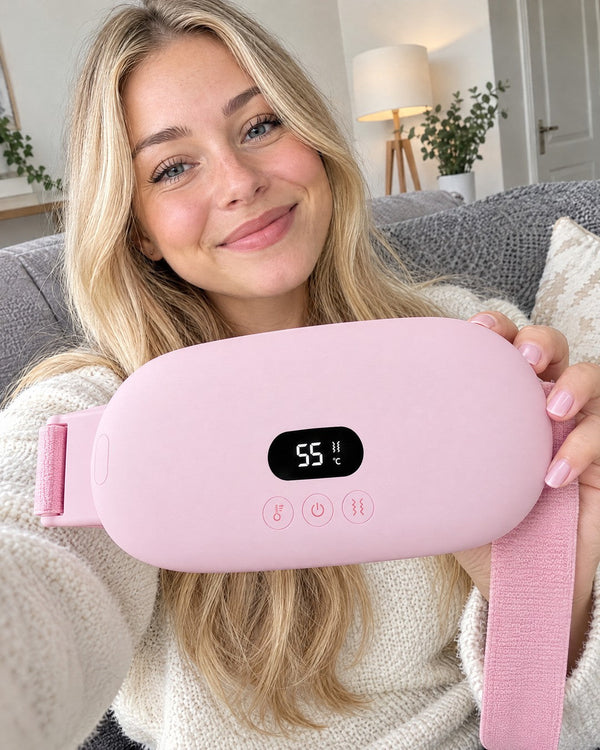
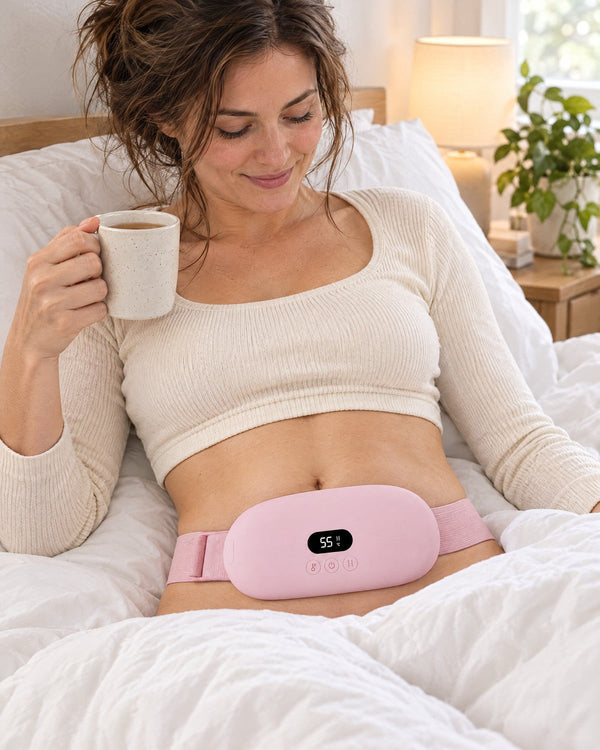
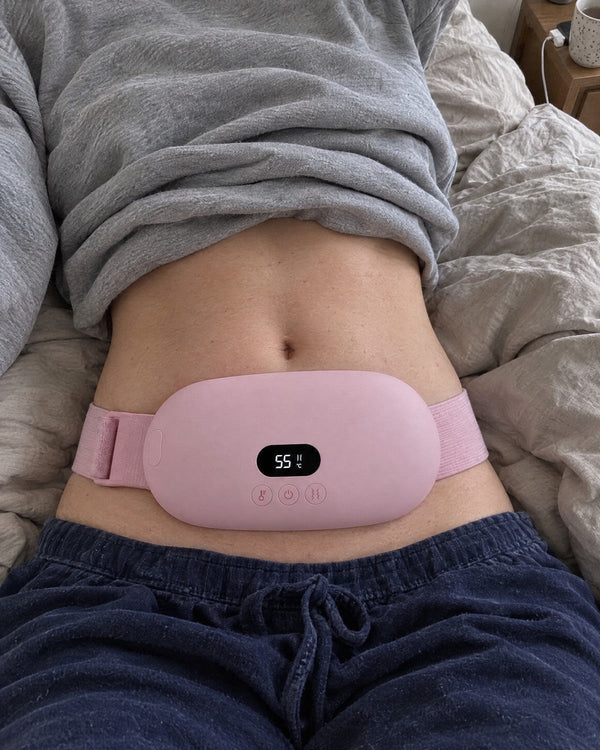
- A cordless heated belt: worn under a jumper (sweater) or loose top, it keeps steady warmth on your tummy while you work. Some include a massage setting.
- A hot drink: not a cure, but holding a warm mug and taking a five-minute break does help.
We compare the options in hot water bottle vs heated belt.
Move when you can
Sitting still for hours can make cramps and lower back pain worse. Get up every hour if you can: walk to get water, take the stairs or do a couple of stretches. Gentle movement improves circulation and can ease pain.
If you work from home
Working from home gives you more options: use a heat source, lie down in your lunch break, and swap your desk chair for the sofa for an hour if your role allows it. Cameras off for a call is fine too.
Talking to your manager
You don't have to share details. Something like "I have a recurring health issue that flares up for a day or two each month, and it would help if I could work from home or take short breaks on those days" is enough. More workplaces now have menstrual health or menopause policies, so check your staff handbook or intranet.
Your rights in the UK
- Sick leave: you can take sick leave for period pain, just as for any other illness. You can self-certify for up to 7 days; after that you'll usually need a fit note from your GP.
- Endometriosis and other conditions: if a condition such as endometriosis has a substantial and long-term effect on your day-to-day life, it may count as a disability under the Equality Act 2010. If so, your employer must consider reasonable adjustments, such as flexible hours, home working or breaks.
- Guidance: Acas publishes free guidance on menstruation and menstrual health at work, which is useful for both employees and employers.
Your rights in the US
- Sick leave: there's no federal right to paid menstrual leave, so period pain usually falls under your employer's sick leave or PTO policy. Some states and cities require employers to offer paid sick leave.
- FMLA: if you're eligible, the Family and Medical Leave Act can give unpaid, job-protected leave, which can be taken intermittently, for a serious health condition such as endometriosis.
- ADA: a condition such as endometriosis may count as a disability under the Americans with Disabilities Act if it substantially limits major life activities. If so, employers with 15 or more employees must consider reasonable accommodations.
If this is a regular struggle, it's also worth seeing your GP or doctor. Pain that stops you working isn't something you should have to accept. Read when to see a GP about period pain, our endo comfort guide and our period pain FAQ.
Common questions
Do I have to tell my employer why I am off sick with period pain?
You do not usually have to give your employer detailed medical information when off sick with period pain, although many employers ask for a general reason. Saying you have a recurring health issue is often enough. In the UK, for absences longer than 7 days you will normally need a fit note from a GP or another healthcare professional.
Is endometriosis classed as a disability at work in the UK?
Endometriosis can count as a disability under the Equality Act 2010 if it has a substantial and long-term effect on a person's ability to do normal day-to-day activities. Long-term usually means lasting, or likely to last, at least 12 months. When endometriosis counts as a disability, an employer must consider reasonable adjustments to support the employee at work.
What reasonable adjustments can help with period pain at work?
Reasonable adjustments (called reasonable accommodations in the US) for period pain at work might include flexible start times, working from home on bad days, extra breaks, easy access to toilets or a desk closer to facilities. Employers only have a legal duty to make adjustments where a condition counts as a disability, but many employers will agree to simple changes like these anyway.
Is there menstrual leave in the UK?
There is no legal right to paid menstrual leave in the UK, and no federal right in the US either. Period pain is treated like any other illness, so you can take sick leave and receive Statutory Sick Pay if you qualify, or company sick pay if your employer offers it. Some UK employers choose to offer their own menstrual health or menopause policies.
Sources
- Acas
- NHS: Period pain
- NHS: Endometriosis
- Endometriosis UK
- US Department of Labor: Family and Medical Leave Act
- EEOC: Disability discrimination
Discreet heat for the working day. The Mello Soothe heat and massage belt is cordless and rechargeable by USB-C, with 5 heat levels and 5 massage modes. Free tracked delivery and a 100-day money-back promise.
This guide is general information, not medical or legal advice. For advice about your situation, speak to your GP or doctor, HR team, Acas (UK) or an employment adviser.