Do Heated Period Belts Work? An Honest Look
How heated period belts ease cramps, what the research on heat says, what a belt can't do, and how to get the most out of one.

In this guide
Heated period belts are everywhere on social media, but do they actually help with period pain (menstrual cramps), or is it just clever marketing? Here's an honest look at what they can and can't do.
Quick answer
Yes, for many people. A heated period belt works by applying steady heat to the lower tummy or back, and heat is one of the NHS's recommended ways to ease period pain. Research suggests continuous low-level heat can reduce cramps. A belt won't cure the cause of painful periods, but it can make a bad day far more manageable.
How a heated period belt works
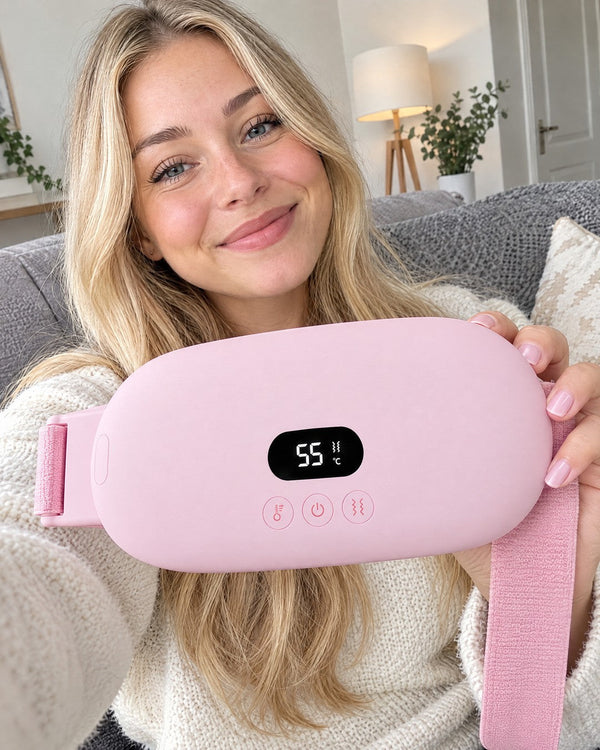
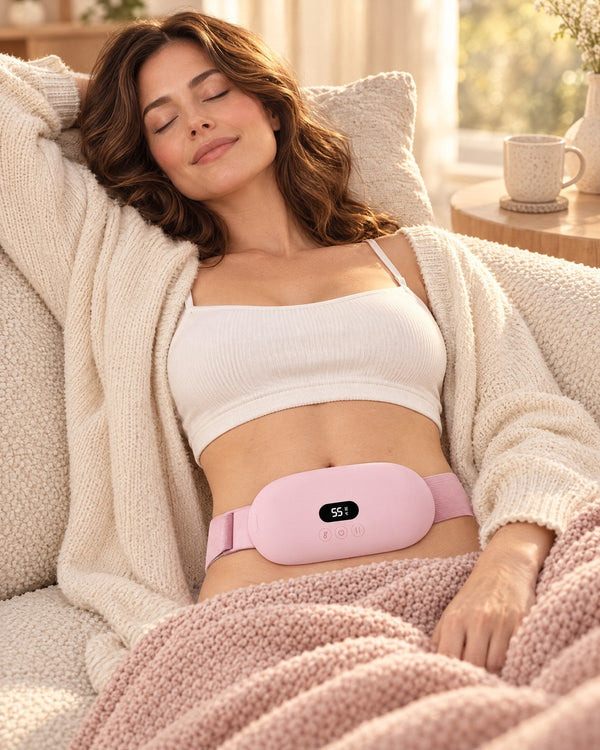
A heated belt is a wearable heat pad. A flexible panel warms up and sits against your lower tummy (or lower back), held in place by an adjustable strap. Cordless versions run on a rechargeable battery, so you can move around while you wear it.
The heat itself does the work. Period cramps happen when the womb (uterus) contracts to shed its lining, driven by chemicals called prostaglandins. Warmth helps in a few ways:
- It relaxes tight muscles in the tummy and lower back.
- It increases blood flow to the area.
- It activates heat receptors in the skin, which seem to dampen pain signals.
We go into more detail in does heat help period cramps?
What the evidence says
Heat for period pain isn't a new idea, and it has been studied. Clinical trials have found that continuous, low-level heat applied to the lower tummy eased period pain, with one well-known study finding it worked about as well as ibuprofen for some people. Reviews of the research have also found heat reduced period pain compared with no treatment, though many of the trials were small.
Most of that research used heat wraps and patches rather than modern rechargeable belts. But the principle is the same: steady warmth on the right area for a decent stretch of time. A belt is simply a more convenient, adjustable way to deliver it.
What about massage? Some belts add vibration. Many people find this soothing, and gentle massage of the tummy is something the NHS mentions as worth trying, but there's much less research on vibration specifically. Think of it as a comfort bonus rather than the main event.
What a heated belt can't do
It's worth being clear about the limits:
- It won't treat or cure endometriosis, fibroids, adenomyosis or any other condition behind painful periods.
- It may not be enough on its own for severe pain. Many people use heat alongside ibuprofen (Advil/Nurofen) or paracetamol (acetaminophen/Tylenol).
- It won't help everyone. If heat does very little for you, a TENS machine or a conversation with your GP or doctor may be a better next step.
If your periods have become more painful, or pain stops you working, studying or sleeping, see a GP or OB-GYN. Our guide on when to see a GP about period pain lists the signs to look out for.
How to get the most out of a heated belt
- Start early. Put it on at the first twinge rather than waiting for cramps to peak.
- Start low. Begin on a lower setting and turn it up only if you need to. Warm and comforting is the goal, never painfully hot.
- Position it well. Low on the tummy, just above the pubic bone, for cramps; turn it round for period lower back pain.
- Use sessions. Around 20–30 minutes at a time, especially on higher settings, with breaks to check your skin.
- Combine it. Heat plus gentle movement, water and rest tends to work better than any one thing alone.
Read our heat pad safety guide before using any heat device regularly.
Is a heated belt better than a hot water bottle?
Not better heat, but better for real life. A hot water bottle cools within the hour and needs you to stay still. A cordless belt holds a steady temperature, lets you choose how warm it is and stays put while you walk around. If you mostly suffer on the sofa, a hot water bottle may be all you need. If you need to keep going, a belt makes more sense. See hot water bottle vs heated belt.
If you want hands-free heat: the Mello Soothe heat and massage belt gives you 5 heat levels from 45 to 65°C, 5 vibration massage modes and a digital display showing the temperature. It's cordless and charges by USB-C. Free tracked delivery and 100 days to send it back.
Common questions
How long does it take a heated belt to work?
Most belts warm up within a few minutes, and many people notice cramps easing within 15–30 minutes. Heat tends to work best when it's applied steadily, so give it a proper session rather than a quick blast.
Do heated belts work for endometriosis pain?
Many people with endometriosis use heat to ease discomfort on flare-up days, and some find it really helps. It doesn't treat the condition itself, so it's best as one part of a plan agreed with your doctor. See our endometriosis comfort tips.
Does the massage function make a difference?
For some people, yes: the gentle vibration feels soothing and distracting alongside the warmth. The evidence is stronger for heat than for vibration, so if you only use one feature, make it the heat.
Can I wear a heated belt all day?
You can use it on and off through the day, but take breaks rather than wearing it on high for hours. Check your skin regularly and stop if it looks red, blotchy or sore. Our period pain FAQ has more practical answers.
This guide is general information, not medical advice. If your pain is severe, getting worse or worrying you, speak to a doctor.