Best Period Pain Relief Devices: An Honest Comparison
Heated belts, heating pads, TENS machines, heat patches and hot water bottles compared honestly, so you can choose the right period pain device for you.

In this guide
There are more gadgets for period pain (menstrual cramps) than ever, from heated belts to TENS machines. This guide compares the main types of device honestly, so you can choose what suits your body, routine and budget.
Quick answer
For most people, heat is the simplest and best-supported drug-free option for period pain, and the NHS recommends it. A wearable heated belt gives hands-free, adjustable heat; a heating pad or hot water bottle is cheaper but keeps you still; heat patches suit long days out; and a TENS machine is a good alternative if heat doesn't help you.
What makes a period pain device worth having?
Before comparing products, it helps to know what actually matters on a bad cramp day:
- Does it help? Heat and TENS both have research behind them for period pain. Heat is the one the NHS mentions first, alongside painkillers and gentle exercise. (What the evidence says about heat.)
- Can you move? Cramps rarely wait for a free afternoon on the sofa. If you need to work, cook or look after children, hands-free matters.
- How long does it last? Cramps often peak over the first one to three days. A device that cools in 30 minutes means a lot of refilling or reheating.
- Can you control it? Adjustable temperature lets you start gently and turn it up or down as needed, which also makes it safer for your skin.
- Running costs. Single-use products add up over a year of periods; rechargeable ones cost more upfront.
The main device types compared
| Device | How it helps | Hands-free? | Good for | Downsides |
|---|---|---|---|---|
| Wearable heated belt | Steady, adjustable heat; some add vibration massage | Yes, if cordless | Moving around at home or work, long cramp days | Higher upfront cost; needs charging |
| Electric heating pad (heat pad) | Steady, adjustable heat over a larger area | No, usually plugged in | Lying on the sofa or in bed | Tied to a socket; easy to fall asleep on |
| TENS machine | Mild electrical pulses through sticky pads | Yes | People who don't find heat helpful | Replacement pads; not suitable for everyone |
| Heat patches | Single-use, air-activated low-level heat for several hours | Yes | Travel, long days out, occasional use | Fixed temperature; ongoing cost and waste |
| Hot water bottle or wheat bag | Comforting heat that gradually cools | No | A cheap, familiar option at home | Cools in under an hour; scald or overheating risk |
Heated belts and heating pads
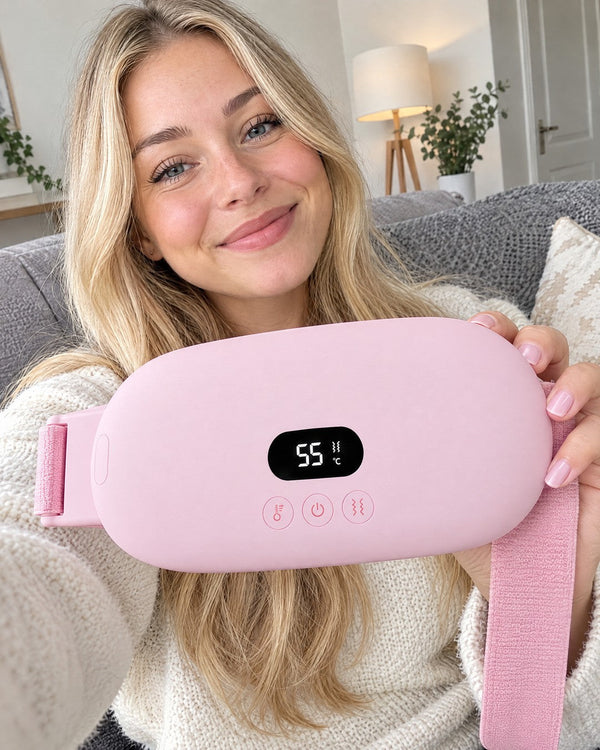
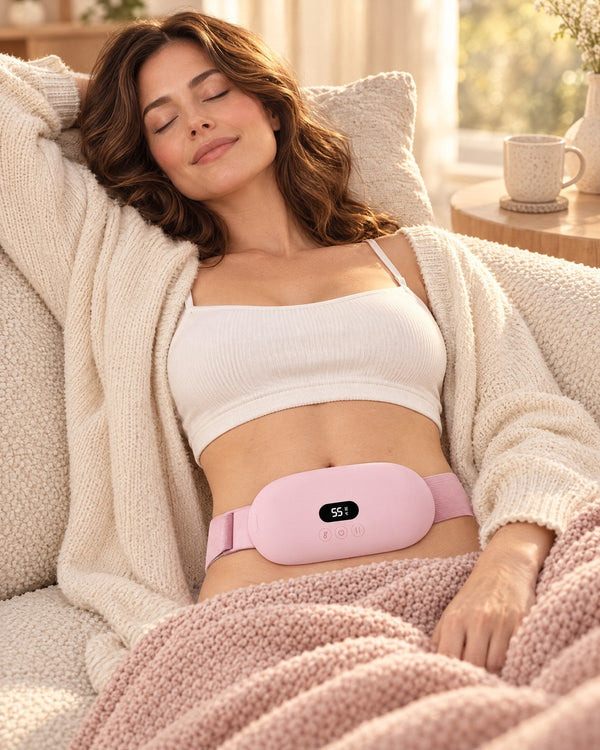
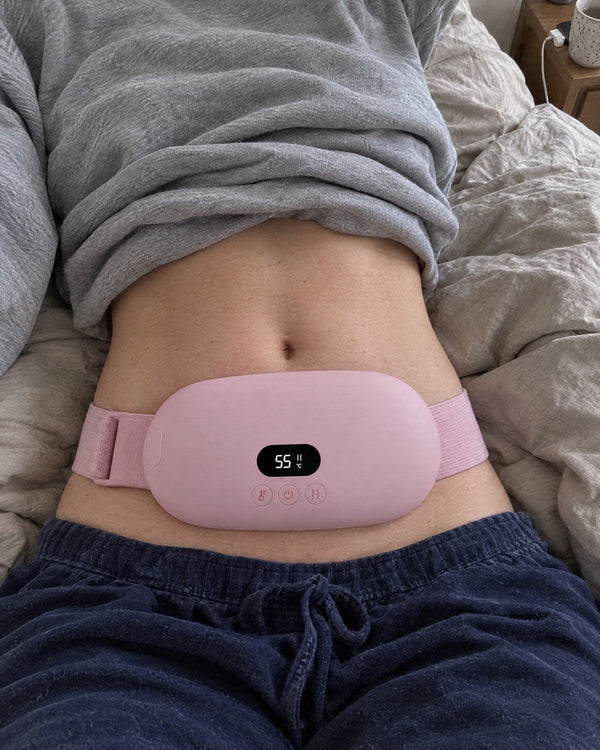
Both deliver the same thing: steady warmth that relaxes tight muscles and soothes cramping. The difference is freedom. A plug-in heating pad is great when you're curled up on the sofa, but you're tethered to the wall. A cordless heated belt straps around your waist so you can stand, walk and carry on with your day. Look for several temperature levels, a display so you know how hot it is, and a battery that lasts a decent session. Our guide to choosing a heated belt goes into the details.
TENS machines
TENS (transcutaneous electrical nerve stimulation) is a different approach: small pulses that are thought to interfere with pain signals. The NHS lists it as an option for period pain, and some people prefer it, especially if heat does little for them. It isn't suitable for everyone, including people with a pacemaker or certain heart conditions or epilepsy, and those who are pregnant should check first. See TENS vs heat for a side-by-side.
Heat patches and hot water bottles
Heat patches are thin, single-use pads that warm up when opened and stay warm for several hours. They're light and discreet, which makes them handy for travel, but you can't change the temperature and the cost adds up month after month (patches vs a reusable belt). Hot water bottles are cheap and comforting, but they cool quickly, keep you still, and need care: use hot rather than boiling water, use a cover, and replace old bottles. More in hot water bottle vs heated belt.
How to choose
- Mostly at home, on a budget: a hot water bottle, wheat bag or heating pad is a sensible start.
- Need to keep going: a cordless heated belt or heat patches.
- Heat doesn't touch it: try a TENS machine, and talk to a GP or doctor about other options.
- Using it most months: a reusable device usually works out cheaper than patches over a year.
Whatever you choose, devices work best alongside other measures such as ibuprofen (Advil/Nurofen) or paracetamol (acetaminophen/Tylenol) if they suit you, gentle movement and rest. If your pain is severe, stops you doing normal things or is getting worse, see a GP or OB-GYN, as it can be a sign of a condition like endometriosis.
If you want hands-free heat: the Welmo Soothe heat and massage belt is cordless and rechargeable by USB-C, with 5 heat levels (45–65°C), 5 vibration massage modes and a digital temperature display, so you can ease cramps while you get on with your day. Free tracked delivery and 100 days to send it back.
Common questions
What is the most effective device for period pain?
There's no single best device for everyone. Heat has the strongest track record and is recommended by the NHS, and TENS has reasonable evidence too. The most effective device is the one you'll actually use, at the right time, for long enough.
Are period pain devices better than painkillers?
They're not a replacement so much as a partner. Some studies have found continuous low-level heat eased period pain about as well as ibuprofen, and many people use heat alongside painkillers. Check with a pharmacist if you're unsure which painkillers are right for you.
Can I use heat and a TENS machine together?
Some people alternate them. Don't put a heat source directly over TENS pads unless the instructions say it's safe, and follow each device's guidance.
Is a heated belt worth the money?
If you get cramps most months and want to move around while you use heat, many people find a rechargeable belt good value compared with buying patches every cycle. If you only need heat on the sofa occasionally, a hot water bottle may be enough. Our period pain FAQ covers more.
This guide is general information, not medical advice. If your pain is severe, getting worse or worrying you, speak to a doctor.