How to Sleep With Period Cramps: Positions and Tips That Help
Cramps keeping you up? The best sleeping positions for period pain, a wind-down routine that helps, and how to use heat safely at bedtime.

In this guide
Period pain has a way of getting worse just as you're trying to get to sleep. With fewer distractions, every cramp feels louder, and poor sleep can make pain harder to cope with the next day. Here's how to give yourself the best chance of a decent night.
Quick answer
To sleep with period cramps (menstrual cramps), lie on your side with your knees drawn up, or on your back with a pillow under your knees. If they suit you, take a painkiller before bed, and use heat on your tummy while you wind down. Move the heat away before you drift off, keep your room cool and cut back on evening caffeine.
The best sleeping positions for period cramps
1. The foetal position
Lie on your side and gently draw your knees up towards your chest. This relaxes the muscles around your tummy and takes pressure off your lower back. Many people find it the single most comfortable position on bad nights.
2. On your back with a pillow under your knees
A pillow under your knees slightly tilts your pelvis and eases tension in your lower back. It's a good option if you're using heat on your tummy.
3. On your side with a pillow between your knees
This keeps your hips and spine aligned, which helps if your period pain spreads into your back or hips.
Position to avoid
Lying flat on your front puts pressure on your tummy and can make cramping and bloating feel worse for some people.
A wind-down routine for period nights
- Get ahead of the pain. If you use painkillers such as ibuprofen (Advil, Nurofen) or paracetamol (acetaminophen, Tylenol) and they're suitable for you, taking one before bed can help you avoid waking up in pain. Follow the label and ask a pharmacist if you're unsure.
- Have a warm bath or shower. Warmth relaxes the muscles, and the drop in body temperature afterwards can make you feel sleepy.
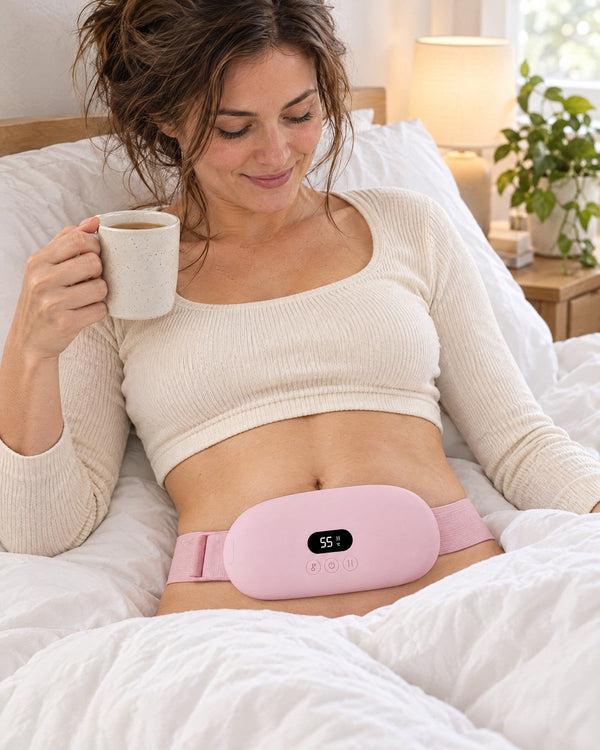
- Use heat while you wind down. Put a heat source on your lower tummy while you read or watch something in bed. (Why it works: does heat help period cramps?)
- Do some gentle stretches. Child's pose, knees-to-chest and a gentle supine twist can all help release tension.
- Cut back on caffeine and alcohol in the evening. Both can disrupt sleep, and alcohol may worsen bloating.
- Keep your room cool and dark. Your body sleeps best in a cool room, even if you're using heat on your tummy.
Using heat safely at night
Heat is brilliant for bedtime cramps, but please don't fall asleep with a hot water bottle, a plug-in heat pad (heating pad) or a heated belt still on. Long, uninterrupted heat on the same patch of skin can cause burns or a mottled rash called erythema ab igne ("toasted skin").
- Use a low setting at night.
- Switch heat off, or move it away, before you drift off.
- Put a thin layer of fabric between hot water bottles and your skin.
- If you wake up, check your skin. Mild pinkness should fade quickly; if it doesn't, give your skin a break.
Our full guide to heat pad safety has more detail.
Avoiding leaks so you can relax
Worrying about leaks doesn't help anyone sleep. Overnight pads, period pants (period underwear) or a menstrual cup (emptied just before bed) can give you more protection, and an old towel under you can bring peace of mind. If you use tampons, follow the guidance on the pack about how long to wear them, and never wear one for longer than 8 hours.
If cramps regularly wreck your sleep
Being kept awake by period pain every month isn't something you just have to put up with. Pain that's severe enough to disrupt your sleep regularly is worth mentioning to your GP or doctor, especially if it's getting worse. See when to see a GP about period pain, or browse our period pain FAQ for quick answers.
Common questions
Why are period cramps worse at night?
Period cramps often feel worse at night because there are fewer distractions, so pain gets more of your attention. Lying still can also let muscles stiffen, and painkillers taken earlier in the day may wear off. Taking a suitable painkiller before bed and using heat while winding down can help period cramps feel more manageable.
Can I sleep with a hot water bottle on my period?
It is safest not to fall asleep with a hot water bottle on your tummy, because hours of heat on one area can cause burns or a mottled rash called erythema ab igne. Use the hot water bottle while winding down, then move it away before sleeping. Never fill it with boiling water, and always use a cover.
Does lack of sleep make period pain worse?
Poor sleep can make period pain feel harder to cope with, as tiredness tends to lower tolerance for pain and affect mood. Protecting sleep around your period, with a regular bedtime, a cool dark room and less caffeine in the evening, can help. Regularly losing sleep to period pain is worth mentioning to a GP or doctor.
Is it safe to sleep in a tampon?
Sleeping in a tampon is generally fine as long as it is worn for no longer than 8 hours. Insert a fresh tampon just before bed and change it as soon as you wake up, using the lowest absorbency that suits your flow. Overnight pads or period pants are good alternatives if you expect to sleep for longer.
Sources
- NHS: Period pain
- NHS: Heavy periods
- Jo J, Lee SH (2018). Heat therapy for primary dysmenorrhea: a systematic review and meta-analysis. Scientific Reports, 8, 16252.
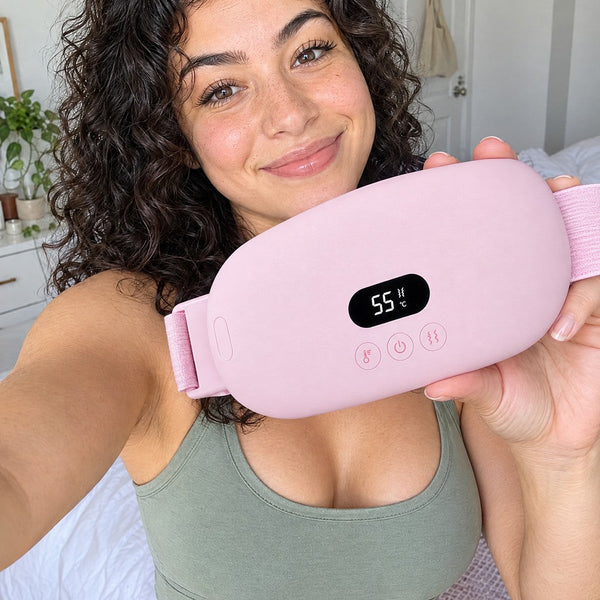
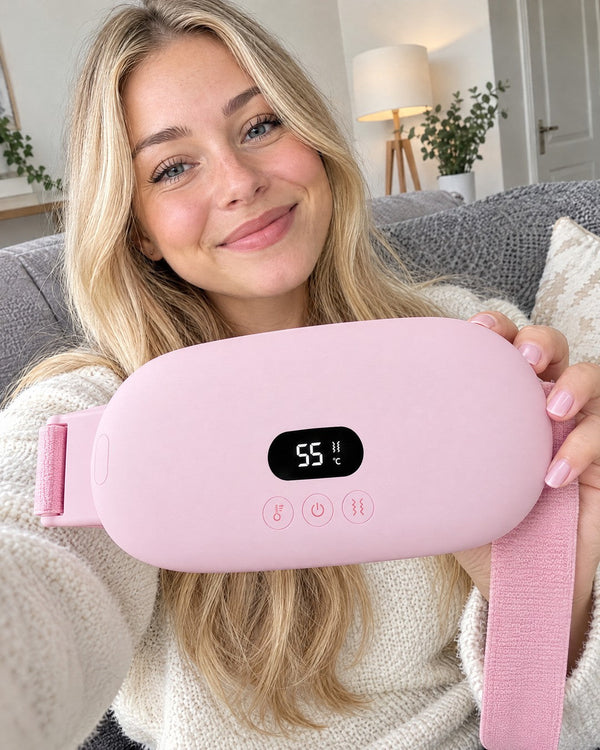
Made for nights like these. The Mello Soothe heat and massage belt is cordless, so there are no wires to tangle in the duvet while you settle, with 5 heat levels and 5 massage modes. Switch it off before you fall asleep. Free tracked delivery and a 100-day money-back promise.
This guide is general information, not medical advice. If your period pain is severe, has changed or worries you, speak to your GP, doctor or a pharmacist.