Sharp, stabbing period pain: what it can mean and when to get help
What can cause sharp, stabbing period pain (menstrual cramps), what eases it, and the red flags that mean you should get checked quickly.

In this guide
Most people picture period pain as a dull, throbbing ache. But for some, cramps arrive as sudden, sharp or stabbing jabs that stop you mid-step. Here's what can cause that kind of pain, what helps, and when it needs checking.
Quick answer
Sharp, stabbing period pain is often strong womb contractions (primary dysmenorrhoea, or dysmenorrhea) and usually eases with ibuprofen (Advil/Nurofen), heat and rest. Pain that is new, getting worse, one-sided or severe can point to conditions such as endometriosis, fibroids or an ovarian cyst. Sudden severe pain, fever, fainting or a chance you could be pregnant needs urgent medical help.
Why period pain can feel sharp
During your period, prostaglandins make the muscle of the womb contract. When contractions are strong, they can briefly squeeze the blood supply to the womb muscle, which can feel like a sudden stab or a wave of sharp pain rather than a steady ache. Passing clots through the cervix can also cause short, sharp cramps, especially on heavy days. This type of pain is usually worst in the first one to three days.
This is known as primary dysmenorrhoea: painful periods with no underlying condition. It's very common, especially in teens and twenties.
Conditions that can cause sharp period pain
When period pain is caused by something else, it's called secondary dysmenorrhoea. Possible causes include:
- Endometriosis: tissue similar to the womb lining grows elsewhere, often causing sharp, stabbing pain, pain during or after sex, painful bowel movements or pain that starts days before bleeding. See our endometriosis comfort tips.
- Adenomyosis: womb-lining tissue grows into the muscle wall, often with heavy, painful periods. Our guide to adenomyosis vs endometriosis explains the difference.
- Fibroids: non-cancerous growths in or around the womb that can cause pain, pressure and heavy bleeding.
- Ovarian cysts: often harmless, but a cyst that bursts or twists the ovary can cause sudden, severe one-sided pain.
- Pelvic inflammatory disease (PID): an infection, often linked to an STI, that can cause pelvic pain, fever and unusual discharge.
- A coil (IUD): sharp cramps are common in the first few months after fitting, especially with a copper coil.
Not every sharp pain in the pelvis comes from the womb. Ovulation pain, constipation, trapped wind, a urine infection (UTI) and appendicitis can all feel similar.
Red flags: get help quickly
Call 999 in the UK or 911 in the US, or go to A&E (the ER), if you have:
- Sudden, severe pain, especially on one side, that doesn't ease
- Pain with fainting, dizziness, a racing heart or feeling very unwell
- Severe pain and you could be pregnant, or a positive pregnancy test, especially with shoulder-tip pain or light bleeding. This can be a sign of an ectopic pregnancy, which is a medical emergency
- Very heavy bleeding, soaking a pad or tampon every hour
Call NHS 111 in the UK, or your doctor or urgent care in the US, the same day if you have:
- Pelvic pain with a high temperature (fever), shivering or unusual discharge
- Pain when you pee, or pain that's getting steadily worse
- Sharp pain that's new for you, or different from your usual periods
If there's any chance you could be pregnant, take a pregnancy test before assuming it's period pain.
What helps sharp period cramps
Once you're confident it's your usual period pain, these tend to help:
- Take ibuprofen early. Anti-inflammatories reduce prostaglandins, so they work best if taken at the first twinge, or just before your period if it's predictable. Paracetamol (acetaminophen/Tylenol) is an option if you can't take ibuprofen. Follow the packet and check with a pharmacist if unsure.
- Use steady heat. The NHS suggests heat for period pain. Warmth on the lower tummy or back for 20 to 30 minutes helps the muscle relax. Start low and avoid falling asleep on high heat; our heat pad safety guide covers the basics.
- Breathe through the wave. Slow breathing, in for four and out for six, can stop you tensing up and making the cramp feel worse.
- Change position. Curling on your side with knees drawn up, or kneeling in child's pose, can ease a sudden cramp.
- Keep a note. Track when sharp pains happen, where, how bad (0 to 10) and what helped. This is useful if you see a GP.
When to book a GP or doctor's appointment
Book a non-urgent appointment with your GP or doctor (or OB-GYN) if sharp pain happens most periods, stops you working or studying, isn't helped by painkillers, or comes with heavy bleeding, pain during sex or pain between periods. Our guide on when to see a GP about period pain covers how to prepare.
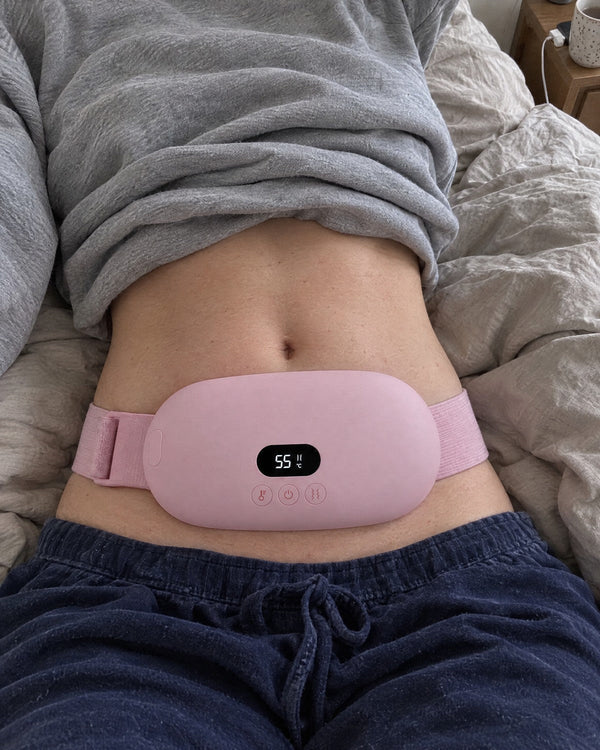
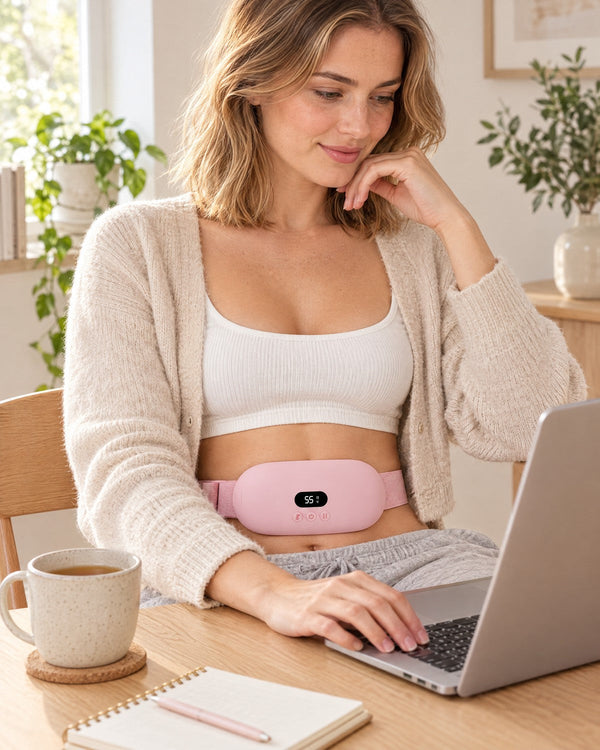
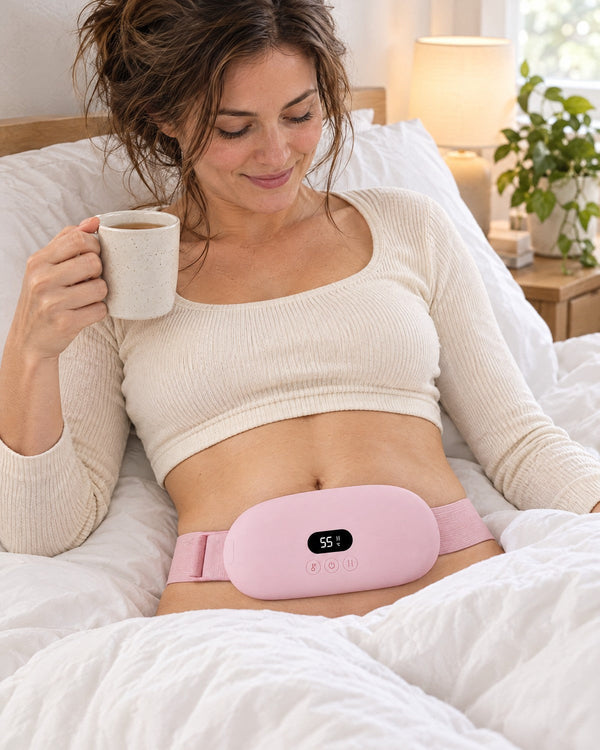
If you want hands-free heat: the Welmo Soothe heat and massage belt is a cordless, rechargeable belt worn on bare skin around your lower tummy or back, with 5 heat levels (45–65°C / 113–149°F), 5 massage modes and a digital display, so you can find a level that eases sharp cramps without being tied to a plug. Free tracked delivery and 100 days to send it back.
Common questions
Is sharp, stabbing period pain normal?
It can be. Strong womb contractions and passing clots can cause sharp cramps, especially on the first days. If it's severe, new, one-sided or getting worse, get checked by a GP or doctor.
Can endometriosis cause stabbing pain?
Yes, many people with endometriosis describe sharp or stabbing pain, during periods and sometimes at other times. Only a doctor can investigate it, so keep a pain diary and ask about it. More on our period pain FAQ.
When is sharp pelvic pain an emergency?
Sudden severe pain, pain with fainting or a racing heart, or pain when you might be pregnant needs urgent help: call 999 (UK) or 911 (US). Pain with a fever should be checked the same day via NHS 111 or your doctor.
Does heat help sharp cramps?
Heat helps the womb muscle relax and many people find it eases sharp cramps. Don't use heat to mask pain that might be an emergency, and don't use it on your tummy if you could be pregnant without checking with a doctor or midwife first.
This guide is general information, not medical advice. If your pain is severe, getting worse or worrying you, speak to a doctor.