Perimenopause Cramps: Why Period Pain Changes in Your 40s
Why period pain can change during perimenopause, what helps, and which changes in bleeding or pain should be checked by a doctor.

In this guide
If your periods have started behaving differently in your 40s, with new or stronger cramps, you're not imagining it. Here is why perimenopause can change period pain, what helps, and which changes should be checked by a doctor.
Quick answer
During perimenopause, hormone levels rise and fall unpredictably, so periods can become irregular, heavier or lighter, and cramps can change too. Ibuprofen or paracetamol, heat on the lower tummy or back, gentle exercise and good sleep often help. New or worsening pain, very heavy bleeding, or any bleeding after the menopause should be checked by a doctor.
What perimenopause is
Perimenopause is the time leading up to the menopause, when your ovaries gradually produce less oestrogen and progesterone and you still have periods. The NHS says symptoms often start in your mid-40s, though they can start earlier, and they can go on for several years. You reach the menopause when you haven't had a period for 12 months.
Common perimenopause symptoms include changes to your periods, hot flushes, night sweats, poor sleep, low mood or anxiety, brain fog and joint aches.
Why cramps can change in perimenopause
- Swinging hormones. Oestrogen can be higher than usual in some cycles and lower in others. Higher oestrogen can mean a thicker womb lining, which can lead to heavier, more crampy periods.
- Irregular cycles. Periods may come closer together, or with long gaps. A period after a long gap is often heavier and more painful.
- Conditions that are more common at this age. Fibroids and adenomyosis are both commonly found in people in their 40s, and both can cause heavier, more painful periods. Read more in fibroids pain relief at home and adenomyosis vs endometriosis.
- Less sleep and more tension. Night sweats and broken sleep can make pain harder to cope with, and stress can make muscles tighter.
What helps perimenopause cramps
- Pain relief. Ibuprofen (Advil/Nurofen) is often helpful for period pain and, for some people, may slightly reduce heavy bleeding. Paracetamol (acetaminophen/Tylenol) is an alternative. Check with a pharmacist if you take other medicines or have stomach, kidney, heart or blood pressure problems.
- Heat, used flexibly. Warmth on the lower tummy or lower back can ease cramping. If you get hot flushes, try a lower setting or a shorter session, or put the heat on your lower back. Take breaks every 20 to 30 minutes and check your skin.
- Regular exercise. Walking, swimming, cycling or yoga can help with cramps and with other perimenopause symptoms such as low mood and poor sleep. Our guide to stretches for period cramps is a good place to start.
- Protect your sleep. A cool bedroom, layers you can take off, and a regular bedtime help. See how to sleep with period cramps.
- Keep a simple diary. Note when bleeding starts and stops, how heavy it is and how bad the pain is. It helps you spot patterns and gives your doctor clear information.
Treatments to ask a doctor about
A GP or doctor (or OB-GYN in the US) can talk you through options if cramps or heavy periods are affecting your life. Depending on your health and symptoms, these may include:
- Hormone replacement therapy (HRT) for perimenopause symptoms
- A hormonal coil (IUS), which can make periods lighter and can also be used as part of HRT
- Medicines to reduce heavy bleeding, such as tranexamic acid
- Tests or scans to look for fibroids, polyps or adenomyosis
When to see a doctor
Changes in your periods are expected during perimenopause, but some changes need checking. See your GP or doctor if:
- Your period pain is new, much worse than before, or not helped by pain relief
- Your periods are very heavy, for example you need to change products every hour or two, pass large clots or flood through to clothes
- You bleed between periods, after sex, or have periods much closer together than usual
- You feel tired, dizzy or breathless, which can be a sign of anaemia
- You have pelvic pain outside your period, bloating that doesn't go away, or feel full quickly when eating
- You have any bleeding after the menopause (12 months or more without a period)
Get urgent help (999 in the UK or 911 in the US, or A&E/ER) for sudden, severe pelvic pain, very heavy bleeding with feeling faint, or pain when you could be pregnant, which is still possible during perimenopause. NHS 111 can advise if you're unsure. See also period pain getting worse.
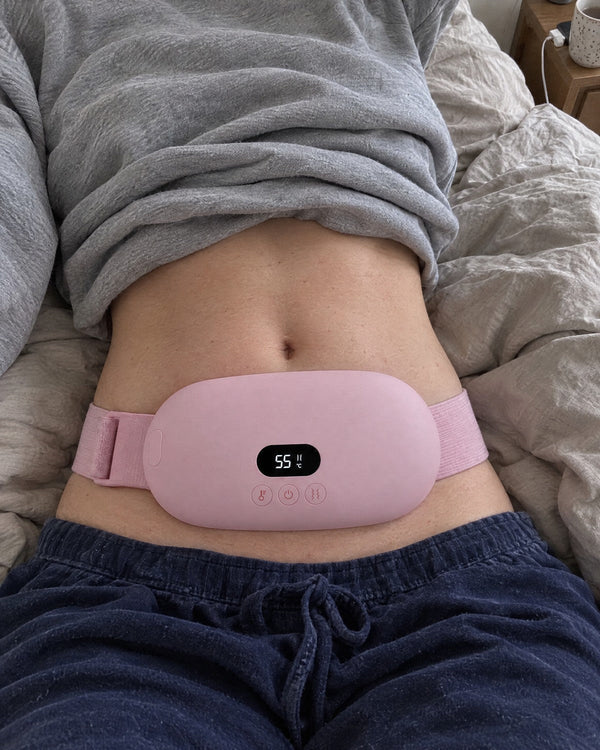
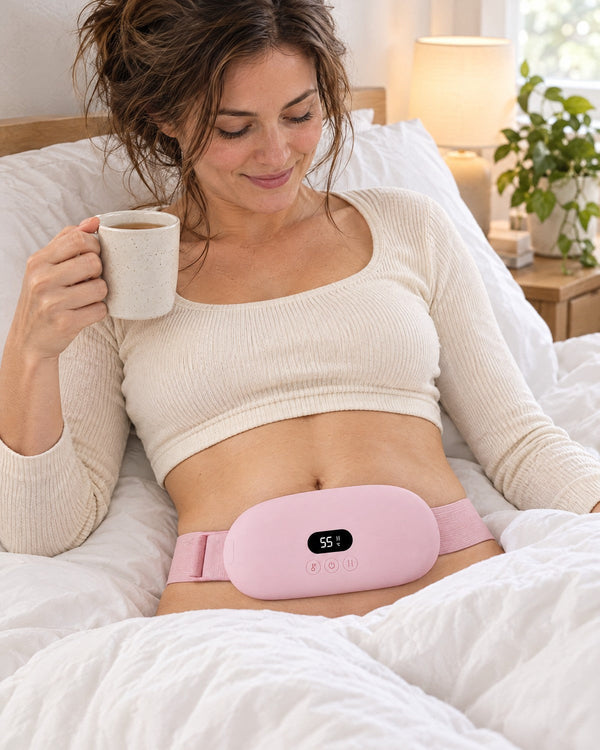
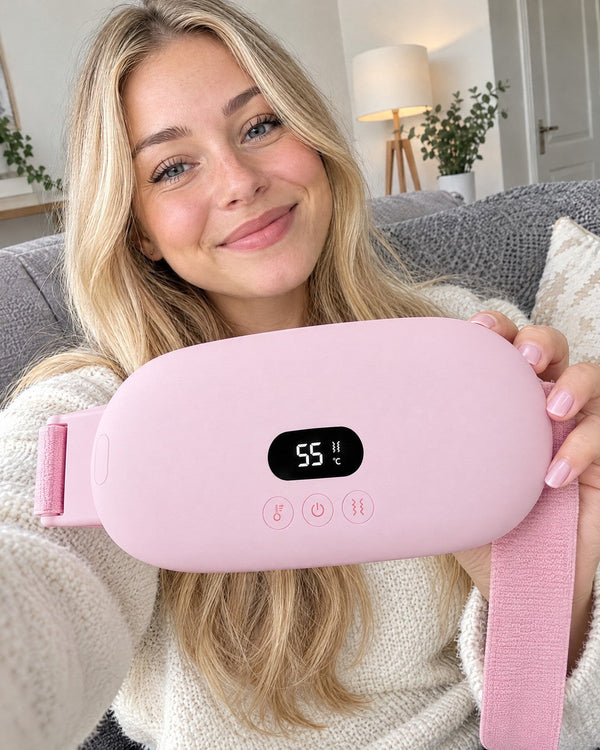
If you want hands-free heat: the Mello Soothe heat and massage belt is cordless and worn on bare skin, with 5 heat levels (45–65°C / 113–149°F), so you can keep things gentle if you run hot, plus 5 massage modes and a digital temperature display. It charges by USB-C and goes with you from desk to sofa. Free tracked delivery and 100 days to send it back.
Common questions
Can perimenopause make period cramps worse?
Yes, for some people. Unpredictable hormones can lead to heavier periods and stronger cramps, and conditions such as fibroids are more common at this age. Pain that's new or much worse is worth checking with a doctor.
Can you get cramps in perimenopause without a period?
Some people get crampy or achy days with no bleeding, or a period that seems to start and stop. Because there are several possible causes, including pregnancy, mention ongoing cramps without a period to your doctor.
Is heat OK if I'm having hot flushes?
Yes, though you may prefer a lower setting, shorter sessions, or placing the heat on your lower back rather than your tummy. Take it off whenever you feel too warm.
Is bleeding after the menopause normal?
No. The NHS advises seeing a GP about any bleeding after the menopause. It's often caused by something minor, but it always needs checking. Our period pain FAQ has more.
This guide is general information, not medical advice. If your pain is severe, getting worse or worrying you, speak to a doctor.