Fibroids Pain Relief at Home: What Helps
What can ease fibroid pain, pressure and heavy periods at home, the treatments a doctor might discuss, and when to get checked.

In this guide
Fibroids are very common, and while many people never notice them, others live with heavy periods, pelvic pressure and aching that can wear you down. Here is what can ease fibroid pain at home, and when to get it checked.
Quick answer
For fibroid pain at home, the most helpful steps are usually anti-inflammatory pain relief such as ibuprofen (if suitable for you), steady heat on the lower tummy or back, rest in a position that takes pressure off the pelvis, and managing heavy bleeding. Home measures ease discomfort but don't shrink fibroids, so ongoing symptoms are worth discussing with a doctor.
What fibroids are
Fibroids are non-cancerous growths made of muscle and fibrous tissue that develop in or around the womb. They can be as small as a pea or much larger, and you can have one or several. The NHS notes that many people with fibroids have no symptoms at all and only find out during a scan for something else.
When fibroids do cause symptoms, the most common are:
- Heavy or long periods
- Period pain or a dull ache in the tummy
- Lower back pain
- A feeling of pressure or fullness in the pelvis
- Needing to wee more often, or constipation, if a fibroid presses on the bladder or bowel
- Pain or discomfort during sex
Fibroids are linked to oestrogen, so they are most common during the reproductive years and often shrink after the menopause.
Fibroid pain relief at home
Pain relief
Anti-inflammatory painkillers like ibuprofen (Advil/Nurofen) can help with period-type pain and may also reduce bleeding a little for some people. Paracetamol (acetaminophen/Tylenol) is an option if you can't take anti-inflammatories. Follow the label, and ask a pharmacist if you take other medicines or have stomach, kidney or asthma problems.
Heat
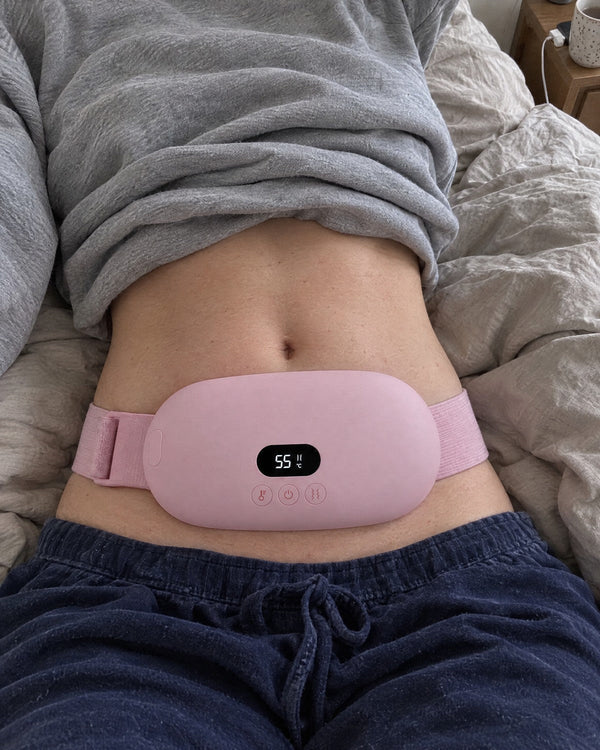
Warmth on the lower tummy or lower back can relax tense muscles and soothe the dragging, achy feeling fibroids can cause. A heating pad or heat pad, hot water bottle or heated belt all work. Keep the temperature comfortable, use it in sessions of around 20 to 30 minutes and check your skin between sessions. If back pain is your main problem, try the heat on your lower back; our guide to period lower back pain has more ideas.
Positions and rest
Lying on your side with a pillow between your knees, or on your back with your knees supported, can ease pelvic pressure. Some people find lying face down uncomfortable with larger fibroids.
Gentle movement
A short walk, swimming or gentle stretching can help with general aches and bloating. Stop anything that makes pain sharper.
Look after yourself on heavy days
Heavy bleeding is often the most draining part of fibroids. Use high-absorbency products or period pants overnight, keep drinking fluids, and include iron-rich foods such as leafy greens, beans, red meat or fortified cereals. Our heavy periods tips cover practical ways to cope.
Treatments a doctor might discuss
If fibroids are affecting your life, a GP or doctor (or OB-GYN in the US) can talk you through options. These depend on your symptoms, the size and position of the fibroids, and whether you want to get pregnant. They may include:
- Medicines to reduce heavy bleeding, such as tranexamic acid or a hormonal coil (IUS)
- Hormonal medicines that can shrink fibroids for a time
- Procedures to remove fibroids (myomectomy) or to cut off their blood supply (uterine artery embolisation)
- A hysterectomy, in some cases, when other treatments haven't helped
Waiting and monitoring is also a reasonable choice for fibroids that aren't causing many problems.
When to see a doctor
Book an appointment with your GP or doctor if:
- Your periods are heavy enough that you need to change products every hour or two, pass large clots, or bleed through to clothes or bedding
- You feel tired, breathless or dizzy, which can be signs of anaemia from blood loss
- You have ongoing pelvic pain, pressure, or pain during sex
- You need to wee much more often or have ongoing constipation
- You notice your tummy getting larger without an obvious reason
- You have any bleeding after the menopause
Get urgent help (999 in the UK or 911 in the US, or A&E/ER) if you have sudden, severe pelvic pain, very heavy bleeding that won't slow down, or you feel faint. NHS 111 can help if you're unsure. For more on this, see when to see a GP about period pain.
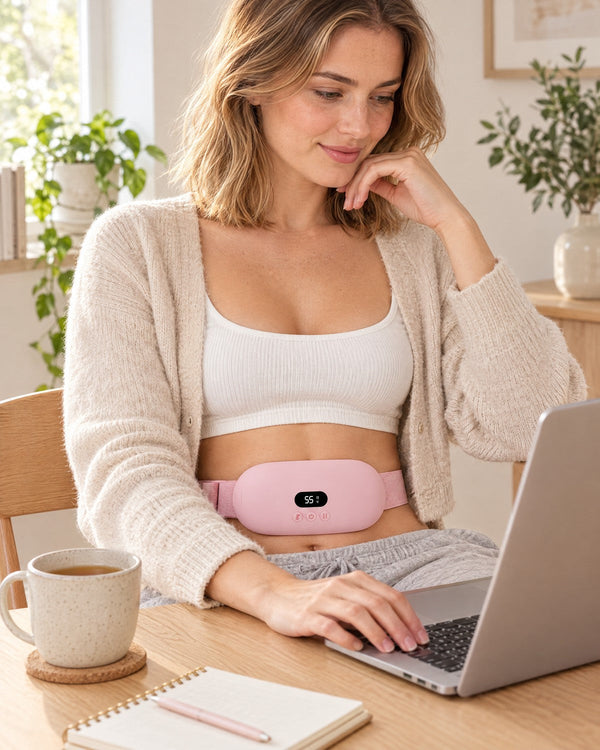
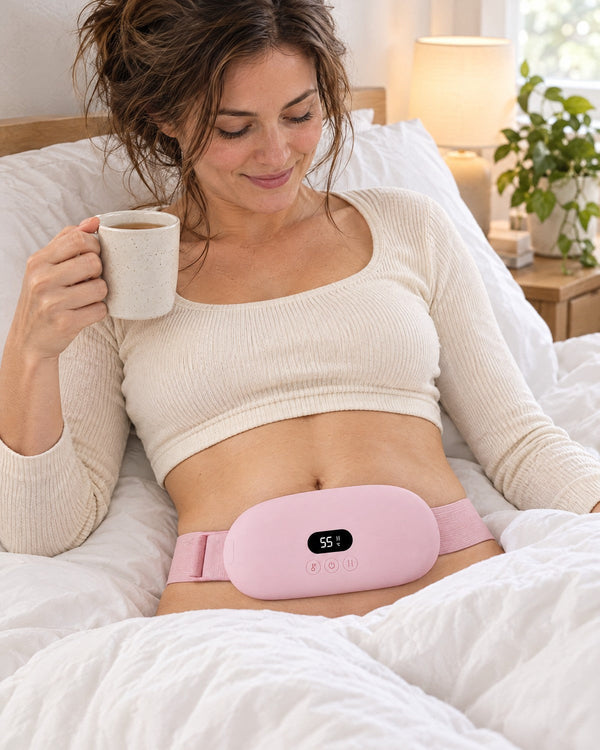
If you want hands-free heat: the Mello Soothe heat and massage belt wraps warmth around your lower tummy or back, with 5 heat levels (45–65°C / 113–149°F), 5 massage modes and a digital temperature display. It's cordless and charges by USB-C, so you can keep it on while you get on with your day. It eases discomfort but doesn't treat fibroids. Free tracked delivery and 100 days to send it back.
Common questions
Can you use a heating pad with fibroids?
For most people, yes. A heating pad on the lower tummy or back is a common way to ease fibroid aches and period-type pain. Keep it comfortably warm, take breaks, and don't fall asleep with it switched on.
What does fibroid pain feel like?
Many people describe a dull, heavy ache or pressure in the pelvis or lower back, often worse during periods. Sudden, severe pain is less typical and should be checked by a doctor.
Will fibroids go away on their own?
Fibroids often shrink after the menopause as oestrogen levels fall. Before then, they may stay the same, grow or occasionally shrink, which is why doctors sometimes recommend monitoring them.
Can fibroids cause period pain to get worse over time?
Yes, they can. Period pain that's getting worse, especially in your 30s or 40s, is a good reason to see a doctor, as fibroids are one of several possible causes. Our period pain FAQ has more.
This guide is general information, not medical advice. If your pain is severe, getting worse or worrying you, speak to a doctor.