Period Bloating Relief: Why It Happens and What Helps
Why hormones make you bloat before and during your period, and the food, movement and warmth tips that help ease it.

In this guide
Jeans that fitted last week suddenly feel tight, and your tummy feels full and puffy. Period bloating is common and usually harmless, but it's uncomfortable. Here's why it happens and what can help ease it.
Quick answer
Period bloating is mainly caused by hormone changes before and during your period, which make your body hold on to more water and can slow digestion. To ease it, cut back on salty and processed food, drink plenty of water, eat smaller meals, stay gently active and use warmth on your tummy. It usually settles within a few days of your period starting.
Why you bloat before and during your period
- Water retention. Shifts in oestrogen (estrogen) and progesterone in the days before your period can make your body hold on to more fluid, so your tummy, breasts and even fingers can feel puffy.
- Slower or upset digestion. Hormone changes can affect your gut, leading to wind, constipation or, once your period starts, looser stools.
- Prostaglandins. The chemicals that make your womb contract can also affect your bowel, which is why cramps, bloating and diarrhoea often arrive together.
- Cravings. Many people crave salty or sugary food before a period, and salt in particular encourages water retention.
Bloating is one of the most common premenstrual symptoms. If you're not sure whether yours is PMS or something else, see PMS vs period cramps.
Food and drink that may help
- Go easy on salt. Crisps, ready meals, takeaways and processed meats are often high in salt. Cooking simple meals for a few days before your period can make a noticeable difference.
- Drink more water, not less. It sounds backwards, but staying hydrated helps your body let go of retained fluid. Aim to sip regularly through the day.
- Eat potassium-rich foods such as bananas, potatoes, spinach, beans and yoghurt, which help balance salt.
- Increase fibre gradually with oats, fruit, vegetables and wholegrains to keep things moving if you get constipated.
- Cut back on fizzy drinks, chewing gum and eating quickly, which can all add air to your gut.
- Try peppermint or ginger tea. Many people find them soothing for a bloated tummy.
- Limit alcohol and lots of caffeine, which can upset digestion in some people.
Our guide to what to eat and drink for period cramps has more ideas.
Movement and posture
A 15 to 30 minute walk can help move trapped wind and ease that heavy, full feeling. Gentle stretches such as child's pose, knees to chest and a lying twist may help too. See gentle stretches for period cramps and does exercise help period cramps. Avoid slumping for hours, which squashes your tummy.
Warmth and gentle massage
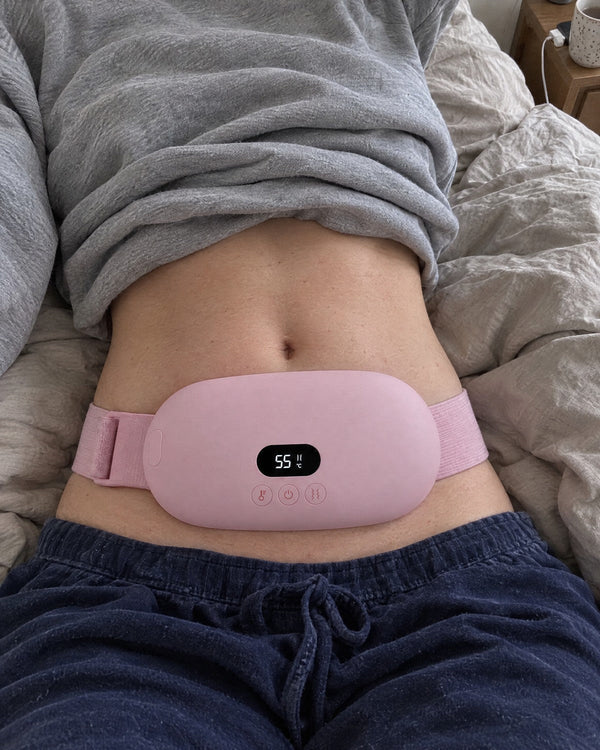
Heat on your tummy won't remove retained water, but warmth can help relax the muscles of your tummy and gut and make bloating feel less uncomfortable, especially when it comes with cramps. Try 20 to 30 minutes of comfortable warmth from a heat pad, heating pad or hot water bottle. Slow clockwise circles with the flat of your hand for a few minutes can also help, as this follows the direction of your bowel. See does massage help period cramps.
Comfort in the meantime
- Wear soft, loose waistbands for the few days you tend to bloat.
- Track your cycle so you know when bloating is likely and can plan meals ahead.
- Get enough sleep. Tiredness can make cravings, and so bloating, worse.
When bloating needs checking
Bloating that comes and goes with your period is common. Speak to a GP or doctor if:
- You feel bloated most days, or it doesn't go away after your period. The NHS advises seeing a GP if you've had bloating most days for 3 weeks or more.
- Bloating comes with pain in your tummy or pelvis, feeling full quickly, needing to wee more often, or a change in your bowel habits.
- You've lost weight without trying, or there's blood in your poo.
- Your periods are very painful or heavy. See when to see a GP about period pain.
These symptoms are usually caused by something less serious, but they're worth getting checked.
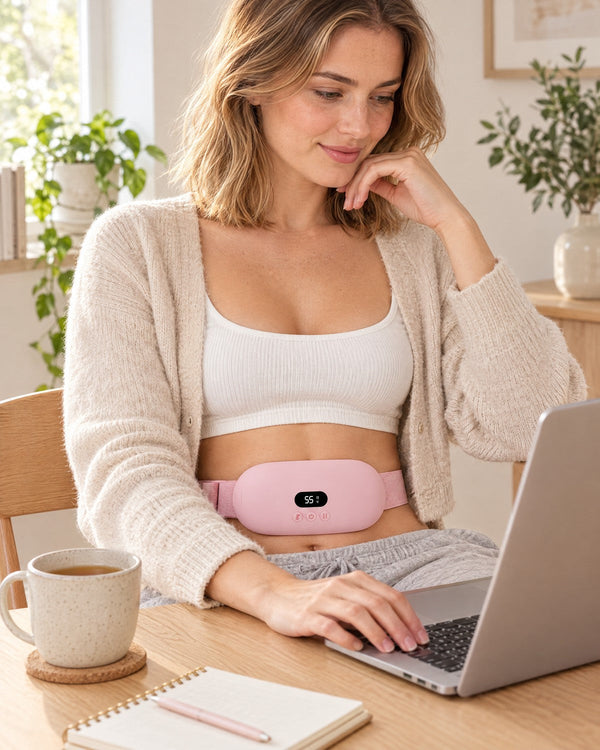
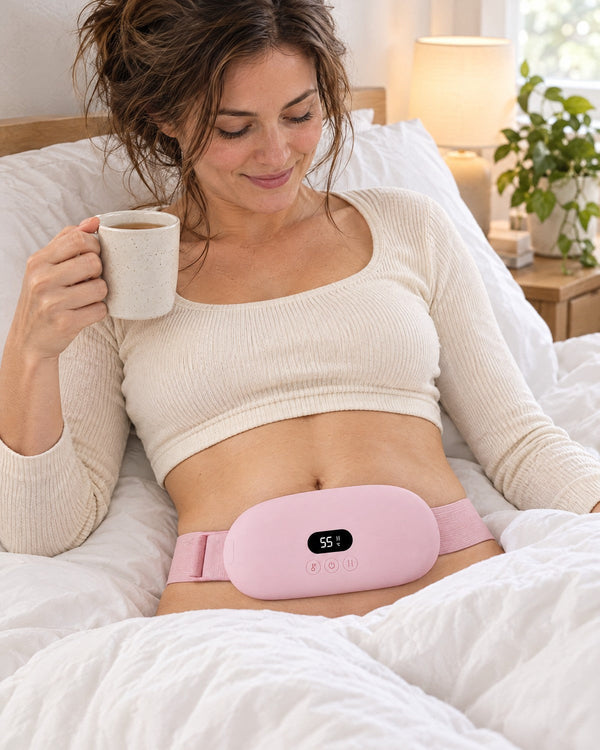
If you want hands-free warmth: the Mello Soothe heat and massage belt is cordless and rechargeable, with 5 heat levels and 5 gentle massage modes, so you can keep warmth on a sore, bloated tummy while you get on with things. Free tracked delivery and 100 days to send it back.
Common questions
How long does period bloating last?
For most people it starts a few days before their period and eases within the first few days of bleeding. If it lasts longer, or you feel bloated most of the month, speak to a GP or doctor.
Does drinking water help period bloating?
Yes, it can. Staying well hydrated helps your body balance fluids, and cutting back on salt at the same time tends to help most.
Does a heat pad help with bloating?
Warmth won't remove retained water, but many people find it makes a bloated, crampy tummy feel more comfortable by helping muscles relax. Keep it at a comfortable temperature and take breaks.
Can I lose period bloating quickly?
There's no instant fix, but a walk, a warm drink such as peppermint tea, loose clothing and gentle heat can make you feel more comfortable within an hour or so. More everyday tips are in our period pain FAQ.
This guide is general information, not medical advice. If your pain is severe, getting worse or worrying you, speak to a doctor.