Period pain in your legs and thighs: why it happens and what helps
Why period pain (menstrual cramps) can spread into your legs and thighs, what eases it, and when an aching leg needs checking.

In this guide
If your period pain doesn't stay in your tummy but drags down the front or inside of your thighs, or leaves your legs feeling heavy and achy, you're not imagining it. Here's why it happens and what tends to help.
Quick answer
Period pain (menstrual cramps) often spreads into the thighs and legs because the womb shares nerve pathways with the lower back, hips and upper legs, so pain is felt further out than where it starts. Heat on the lower tummy or lower back, gentle movement, stretching and ibuprofen (Advil/Nurofen) or paracetamol (acetaminophen/Tylenol) usually ease it. A swollen, hot or red leg needs a doctor.
Why period pain spreads to your legs
During your period, the lining of the womb releases prostaglandins, chemicals that make the muscle of the womb contract to shed the lining. Stronger contractions mean stronger cramps. The womb and pelvis share nerve pathways with the lower back, hips and thighs, so your brain doesn't always pinpoint where the pain is coming from. This is called referred pain, and it is why many people feel a dull ache or a pulling sensation down the front or inner thighs, sometimes as far as the knees.
Prostaglandins can also travel around the body, which is part of why some people get loose stools, nausea or a general heavy, tired feeling in their legs on the first day or two of bleeding.
What leg and thigh period pain usually feels like
- A dull, dragging ache in the front or inner thighs that comes and goes with your cramps
- Heavy, tired legs, especially on the heaviest days
- An ache that links your lower back, hips and thighs together
- Pain that's worse when you sit still for a long time and a little better when you move
It usually starts around the time bleeding begins, peaks over the first 24 to 72 hours and fades as your period settles. Our guide to how long period cramps last covers the typical pattern.
What helps leg and thigh period pain
Heat where the pain starts
Because the pain is coming from the womb, heat on your lower tummy or lower back often helps the thighs too. The NHS suggests heat as a simple way to ease period pain, and many people find 20 to 30 minutes of steady warmth calms the whole ache. Start on a low setting (around 45°C) and only turn it up if it feels comfortable. You can also hold a wrapped hot water bottle or heat pad (heating pad) on the top of your thighs for short spells. See does heat help period cramps for why warmth works.
Move gently
A 10 to 15 minute walk, a few slow lunges or simply standing up and moving around every 30 to 45 minutes can stop the ache settling into stiff legs. You don't need a workout; light movement is enough.
Stretch the hips and thighs
Try holding each of these for 30 to 60 seconds, breathing slowly:
- Child's pose: knees wide, sit back towards your heels and rest your forehead down.
- Butterfly stretch: sit with the soles of your feet together and let your knees drop out.
- Kneeling hip flexor stretch: one knee down, the other foot forward, and ease your hips forward.
- Knees to chest: lying on your back, hug both knees in and rock gently.
More ideas in our stretches for period cramps guide.
Painkillers, taken early
Anti-inflammatory painkillers such as ibuprofen work on prostaglandins, so they tend to work best if you take them as soon as the pain starts, or just before if your periods are predictable. Paracetamol is an alternative if you can't take ibuprofen. Follow the packet dose and check with a pharmacist if you have asthma, stomach problems or take other medicines.
Comfort at night
Lying on your side with a pillow between your knees takes pressure off your hips and lower back. Our guide to sleeping with period cramps has more positions to try.
When leg pain isn't just period pain
Speak to a GP or doctor (or OB-GYN) if:
- Your period pain is severe, getting worse each cycle, or stops you doing normal things
- Leg or thigh pain happens outside your period too
- You have pain, numbness, tingling or weakness running down the back of one leg that follows your cycle; this is uncommon but can be linked to endometriosis and is worth mentioning
- Painkillers and heat don't touch it
Get urgent help the same day (call NHS 111 in the UK, or your doctor or urgent care in the US) if one leg, usually the calf, becomes swollen, warm, red or painful to touch. This can be a sign of a blood clot (DVT), which is more likely if you take a combined hormonal contraceptive. Call 999 in the UK or 911 in the US if you also feel short of breath, have chest pain or cough up blood. Our guide on when to see a GP about period pain covers other signs to look out for.
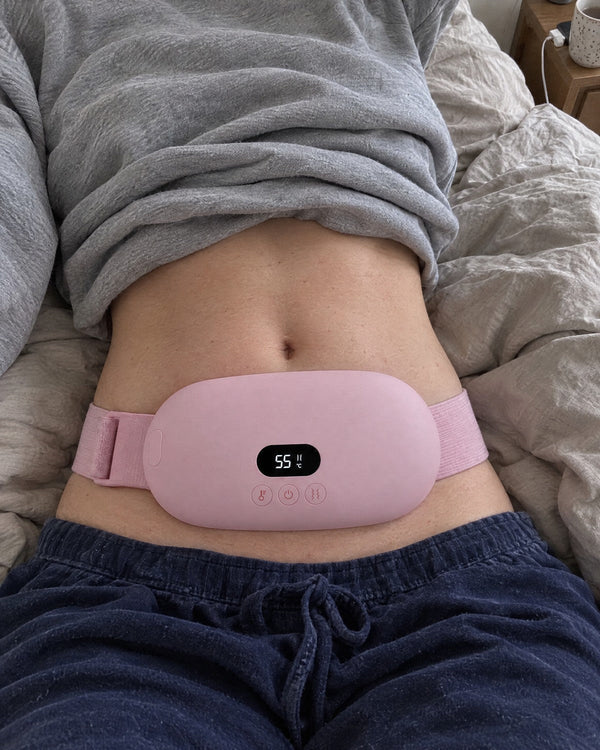
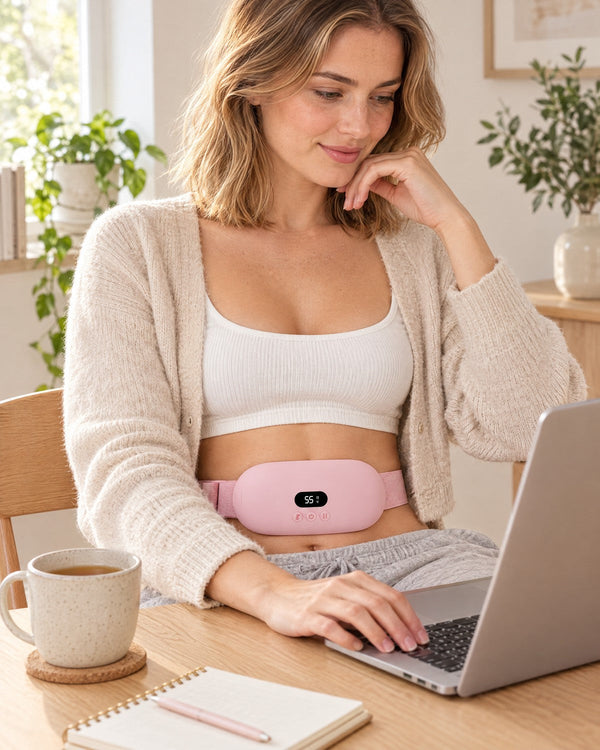
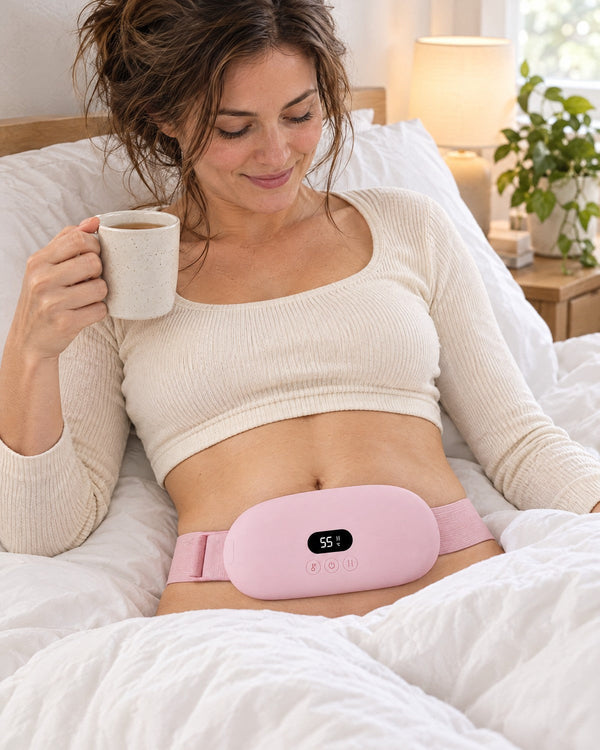
If you want hands-free heat: the Mello Soothe heat and massage belt is a cordless, rechargeable belt you wear on bare skin around your lower tummy or back, with 5 heat levels (45–65°C / 113–149°F) and 5 gentle massage modes, so you can keep moving while the warmth gets to work. Free tracked delivery and 100 days to send it back.
Common questions
Is it normal to have period pain in your legs?
Yes, it's common. Pain from the womb is often felt in the lower back, hips and thighs because they share nerve pathways. If it's severe, getting worse or happens outside your period, it's worth seeing a GP or doctor.
Why do my thighs ache on my period?
Prostaglandins make the womb contract, and that pain can be referred into the front and inner thighs. Heavy, tired legs on the heaviest days are also common.
Should I put heat on my legs or my tummy?
Start with your lower tummy or lower back, because that's where the pain comes from, and it often eases the thighs too. A wrapped heat pad on the thighs for short spells is fine as well. Never use heat on skin that's numb, broken or very sensitive.
When is leg pain during a period an emergency?
If one leg is swollen, hot, red or painful, get same-day medical advice as it could be a clot. If you're also breathless or have chest pain, call 999 (UK) or 911 (US). You can find more answers on our period pain FAQ.
This guide is general information, not medical advice. If your pain is severe, getting worse or worrying you, speak to a doctor.